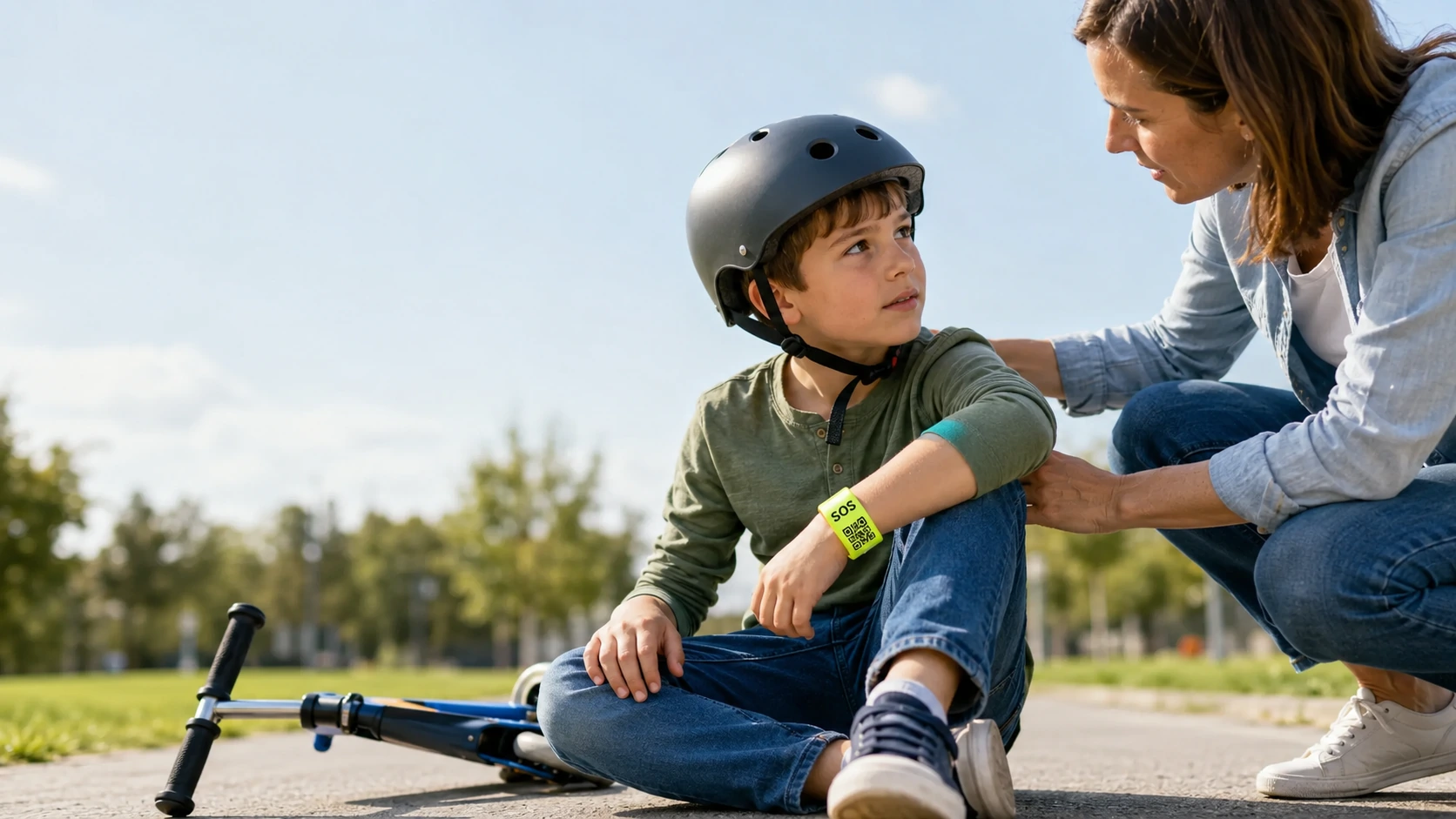
Ongelukken met stepjes bij kinderen kunnen binnen een paar seconden gebeuren. Een kind verliest zijn evenwicht, stoot tegen een stoeprand of valt op een harde ondergrond. Plotseling verandert een gewone middag in het park in een noodsituatie.
Het risico wordt nog zorgwekkender als het kind alleen of met vrienden op de fiets zit. Er is misschien geen ouder in de buurt. Bovendien heeft het kind misschien geen telefoon, portemonnee, zorgpas of opgeschreven contactgegevens voor noodgevallen bij zich.
Als een gewond kind bang, in de war of bewusteloos is, kan het misschien ook niet uitleggen wie het is. Daardoor hebben volwassenen ter plaatse misschien niet meteen een manier om contact op te nemen met de ouders of om meer te weten te komen over belangrijke allergieën, medische aandoeningen of medicatie.
Een draagbaar noodidentiteitsbewijs kan helpen om deze informatiekloof te dichten.
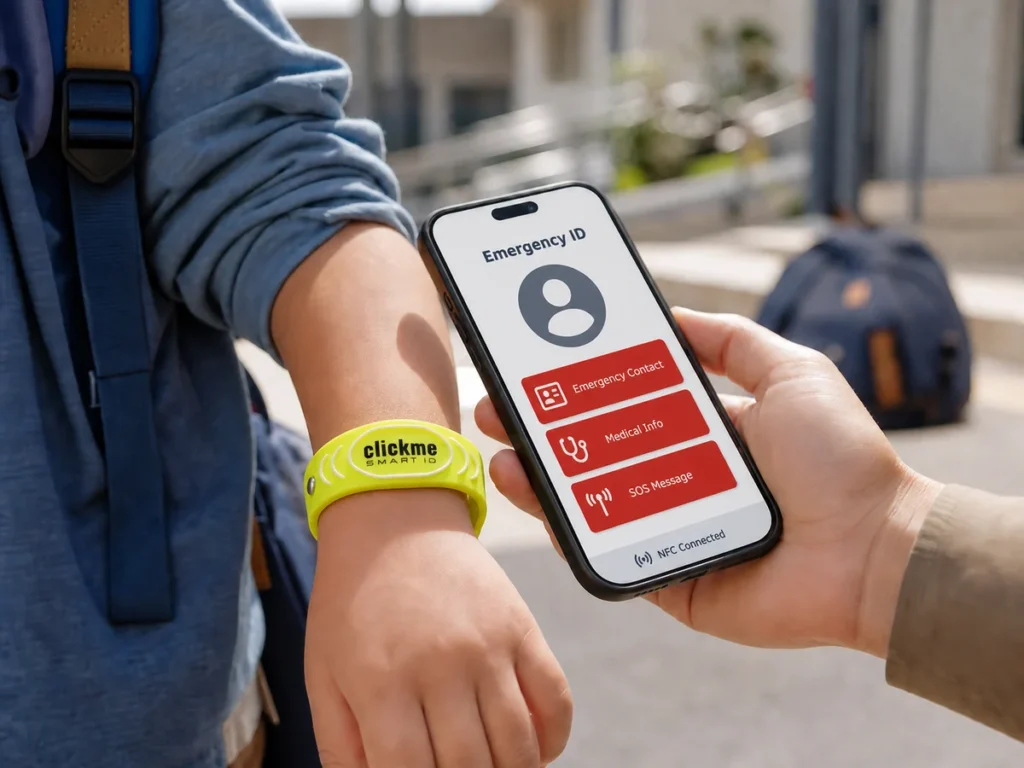
Met een nood-ID-armband kan iemand anders een gewond kind identificeren, contact opnemen met de ouders en eventuele noodinformatie bekijken. Bij een armband met NFC en QR-code kun je de informatie openen met een compatibele smartphone, zonder dat het kind zelf een telefoon bij zich hoeft te hebben.
Steppen zijn populair omdat ze compact, betaalbaar en leuk zijn. Kinderen gebruiken ze in de buurt van scholen, in parken, rond speeltuinen en in woonwijken.
Maar steps hebben ook kleine wieltjes en een relatief hoog zwaartepunt. Een kuil, een stoeprand, een losse steen of een plotselinge beweging kan al snel tot een val leiden. De Amerikaanse Consumer Product Safety Commission waarschuwt dat de kleine wieltjes van een step plotseling kunnen stoppen als ze op oneffenheden of obstakels terechtkomen, waardoor de berijder naar voren wordt geslingerd
Uit recente statistieken blijkt hoe snel het aantal ongevallen met micromobiliteit is toegenomen:
In een recent onderzoek van het Johns Hopkins Children’s Center zijn 2.117 geregistreerde letselgevallen bij kinderen met e-scooters tussen 2020 en 2024 onder de loep genomen. Het aantal steeg elk jaar, en 42,2% van alle geregistreerde gevallen vond alleen al in 2024 plaats. Kinderen van 11 tot 14 jaar vormden de grootste leeftijdsgroep, terwijl jongens ongeveer 70% van de gewonde kinderen uitmaakten
Deze bevindingen betekenen niet dat steps wereldwijd de belangrijkste oorzaak zijn van alle soorten letsel bij kinderen. Ze laten echter wel duidelijk zien dat letsel door steps een steeds belangrijker veiligheidsprobleem voor kinderen wordt.
De meest recente ziekenhuiscijfers zijn nog zorgwekkender.
Children’s Health Ireland meldde in juli 2026 dat e-scooters de belangrijkste oorzaak waren geworden van traumatisch hersenletsel bij kinderen die waren opgenomen op de afdelingen Neurochirurgie en Revalidatie van CHI in Temple Street.
In 2026 waren verwondingen door e-scooters verantwoordelijk voor meer dan een derde van alle opnames wegens traumatisch hersenletsel daar. Het aantal opnames voor hersenletsel door e-scooters steeg binnen twaalf maanden ook met 50%. In de zomer behandelden de spoedeisendehulpafdelingen van CHI naar schatting één tot twee kinderen per dag met verwondingen door e-scooters.
Van de 30 kinderen die tussen mei 2024 en juni 2026 in het ziekenhuis zijn opgenomen met traumatisch hersenletsel als gevolg van een e-scooter:
Deze cijfers hebben betrekking op een groep ernstig gewonde kinderen die in een gespecialiseerd ziekenhuis zijn opgenomen. Je moet ze niet zien als het resultaat van elke val met een step. Toch laten ze wel zien hoe ernstig een stepongeluk kan uitpakken.
De zichtbare verwonding is maar een deel van de noodsituatie.
Stel je voor dat een kind op een step naar een vriendje of vriendinnetje rijdt. Het kind valt en kan niet goed praten door de pijn, paniek, een hersenschudding of shock. Zijn of haar vriendjes kennen misschien wel de voornaam, maar niet de telefoonnummers van de ouders. Het kind heeft misschien geen telefoon of identiteitsbewijs bij zich.
De volwassenen die stoppen om te helpen, willen misschien antwoord op een paar dringende vragen:
Hulpdiensten volgen altijd hun professionele procedures. Maar als je het kind snel kunt identificeren en snel contact kunt opnemen met een ouder, kan dat toch waardevolle achtergrondinformatie opleveren en onzekerheid verminderen.
Een ouder kan de identiteit van het kind bevestigen, relevante achtergrondinformatie geven en zo snel mogelijk naar het ziekenhuis komen.
Oudere kinderen hebben soms een smartphone bij zich. Maar als je helemaal op de telefoon van je kind vertrouwt, heeft dat een paar nadelen.
De telefoon kan het volgende zijn:
Jongere kinderen hebben vaak helemaal geen eigen telefoon.
Een armband zit altijd om de pols van het kind. Je ziet hem altijd en het kind hoeft geen wachtwoord te onthouden, een apparaat te ontgrendelen of uit te leggen waar zijn of haar noodgegevens staan.
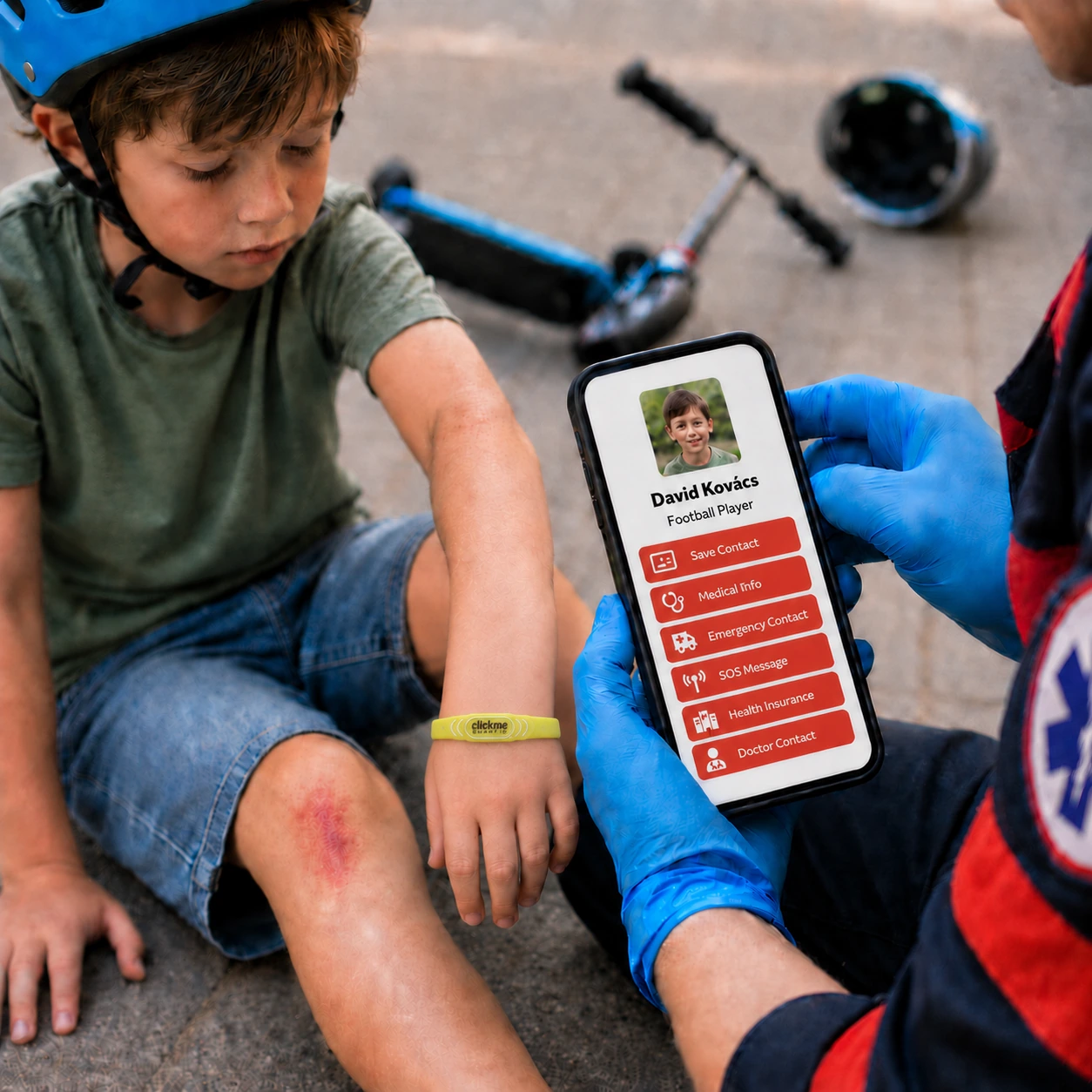
De ClickMe SOS NFC-identiteitsarmband voor kinderen combineert een NFC-chip met een zichtbare QR-code. Iemand anders kan het online SOS-profiel van het kind op twee manieren openen:
Het profiel wordt direct in de browser van je telefoon geopend, dus je hebt geen speciale app nodig. De informatie kun je ook online bijwerken wanneer dat nodig is
Dit betekent dat het kind geen smartphone bij zich hoeft te hebben. De persoon die hulp biedt, gebruikt zijn of haar eigen telefoon om het profiel te openen.
Door de neon-gele kleur valt de armband ook goed op tijdens buitenactiviteiten.
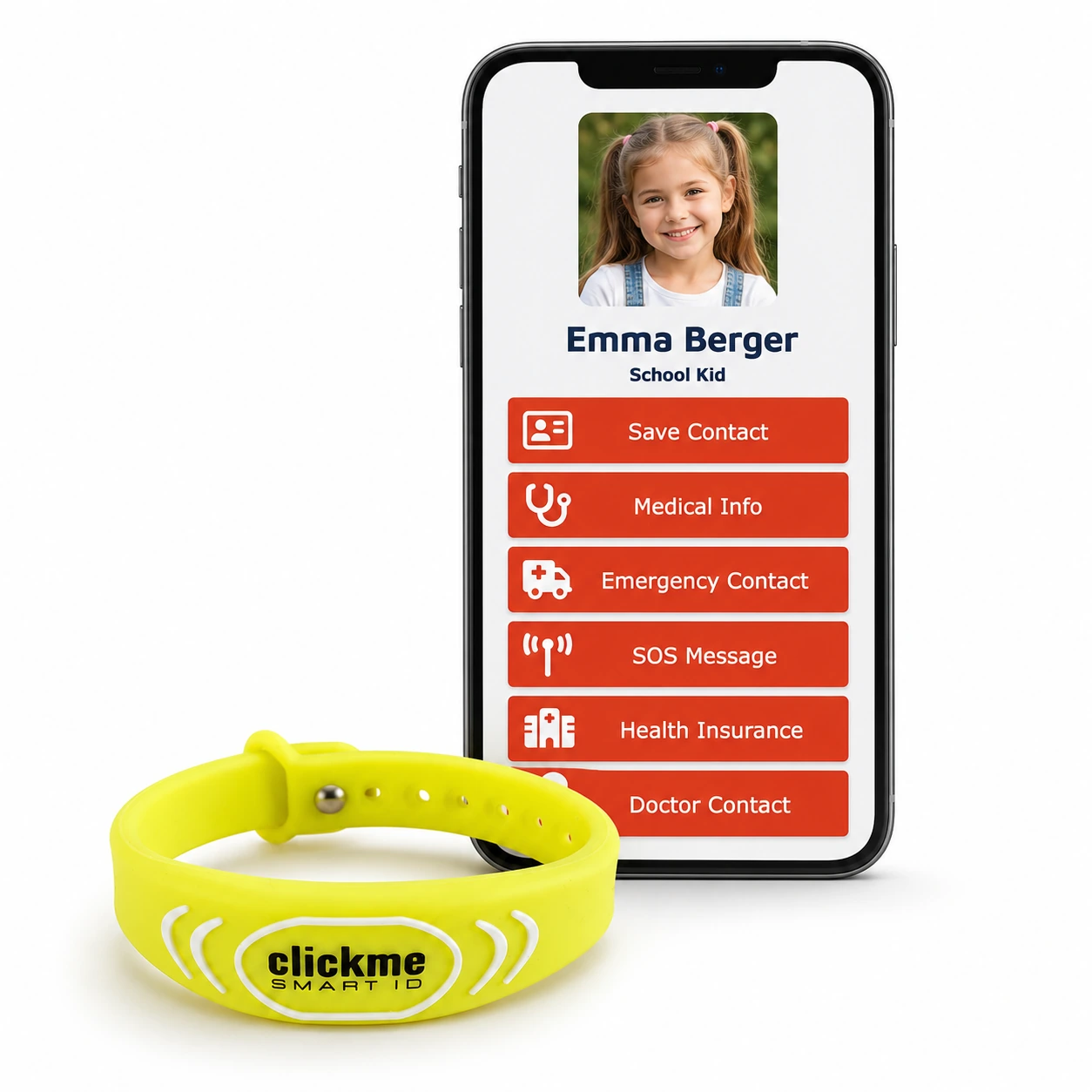
Elk veld in het ClickMe SOS-profiel is optioneel. Ouders bepalen zelf welke informatie ze willen delen.
Het profiel kan het volgende bevatten:
Het profiel bevat niet alleen medische gegevens. Het belangrijkste doel ervan kan gewoon zijn om het kind te kunnen identificeren en iemand in staat te stellen de ouders te bellen
Ouders moeten de informatie regelmatig doornemen. Telefoonnummers, medicatie en instructies voor noodgevallen moeten altijd up-to-date zijn.
Om privacyredenen moet je alleen informatie toevoegen die in een noodgeval echt van pas kan komen. Het is meestal niet nodig om grote hoeveelheden persoonlijke gegevens te publiceren.
Naarmate kinderen ouder worden, worden ze steeds zelfstandiger. Ze gaan bijvoorbeeld naar school, bezoeken vrienden, doen mee aan sportactiviteiten of fietsen door de buurt zonder dat er een ouder naast ze staat.
Deze zelfstandigheid is een belangrijk onderdeel van de kindertijd. Maar het betekent ook dat ouders niet bij elke onverwachte situatie fysiek aanwezig kunnen zijn.
Een SOS-armband houdt het kind niet in de gaten en voorkomt ook geen ongelukken. In plaats daarvan vormt hij een eenvoudige schakel tussen het kind, de hulpverlener en de familie.
Het kan vooral handig zijn tijdens:
Diezelfde armband kan dus meer doen dan alleen zorgen voor veiligheid op de step. Hij kan ook helpen als een kind verdwaalt, bang wordt of van zijn of haar familie gescheiden raakt.
Een NFC-noodarmband is een extra veiligheidsmaatregel. Het is geen vervanging voor het voorkomen van ongelukken.
Kinderen moeten altijd een goedgekeurde, goed passende helm dragen als ze op een step of fiets rijden. Ze moeten ook goed zichtbare kleding dragen en de juiste beschermingsmiddelen gebruiken.
De CPSC raadt aan om voor je gaat rijden de remmen, het stuur, de banden en het frame van de step te controleren. Ze raadt gebruikers ook aan om op obstakels te letten, beide handen aan het stuur te houden en geen tweede persoon mee te nemen
Ouders moeten ook rekening houden met de leeftijd en ervaring van het kind, en met de lokale verkeersregels. Elektrische steps kunnen veel hogere snelheden halen dan gewone steps en er kunnen wettelijke leeftijdsbeperkingen voor gelden.
De ClickMe SOS NFC ID-armband is geen vervanging voor:
Het is een handig veiligheidsaccessoire dat is ontworpen om het herkennen van kinderen en het contact met de ouders makkelijker te maken
De meeste ritjes op de step verlopen zonder problemen. Maar ongelukken zijn nu eenmaal onvoorspelbaar. Ouders kunnen niet weten wanneer een kind valt, in de war raakt of hulp van een vreemde nodig heeft.
Met een goed zichtbare nood-ID-armband kan je kind belangrijke contactgegevens bij zich dragen zonder dat het papieren of een telefoon hoeft mee te nemen.
De ClickMe SOS NFC ID-armband voor kinderen biedt via NFC en QR-code toegang tot een bewerkbaar online profiel. Zo kan iemand anders het kind identificeren, contact opnemen met de ouders en eventuele noodberichten bekijken als elke minuut telt.
Het aantal verwondingen bij kinderen door steps en e-steps is flink gestegen. Uit Amerikaanse veiligheidsgegevens blijkt dat kinderen van 14 jaar en jonger onevenredig vaak betrokken zijn bij ongevallen met micromobiliteit. Recente gegevens van gespecialiseerde ziekenhuizen in Ierland laten ook een sterke stijging zien van ernstig hersenletsel door e-steps.
Nee. Een SOS-armband kan een ongeluk niet voorkomen. Hij kan wel helpen om het kind te identificeren, contactgegevens voor noodgevallen te verstrekken en na een incident eventuele veiligheidsinformatie beschikbaar te stellen.
Nee. Iemand die hulp biedt, kan de QR-code scannen of de NFC-chip aanraken met zijn eigen compatibele smartphone. Het SOS-profiel wordt dan in een webbrowser geopend, zonder dat je daarvoor iets speciaals nodig hebt
Ouders kunnen contactpersonen voor noodgevallen, allergieën, medische aandoeningen, opmerkingen over medicatie en speciale instructies toevoegen. Alle velden zijn optioneel en je kunt het profiel online bijwerken
Nee. De armband is een extra hulpmiddel voor de veiligheid van kinderen. Hij is geen vervanging voor een officiële medische identificatie, professioneel medisch advies, noodprocedures of goed toezicht.
Nee. Het kan ook handig zijn op school, tijdens het sporten, op speelplaatsen, op reis, op kampen en op drukke openbare plekken.
Kijk even naar de Clickme Smart SOS-polsbandje voor kinderen