
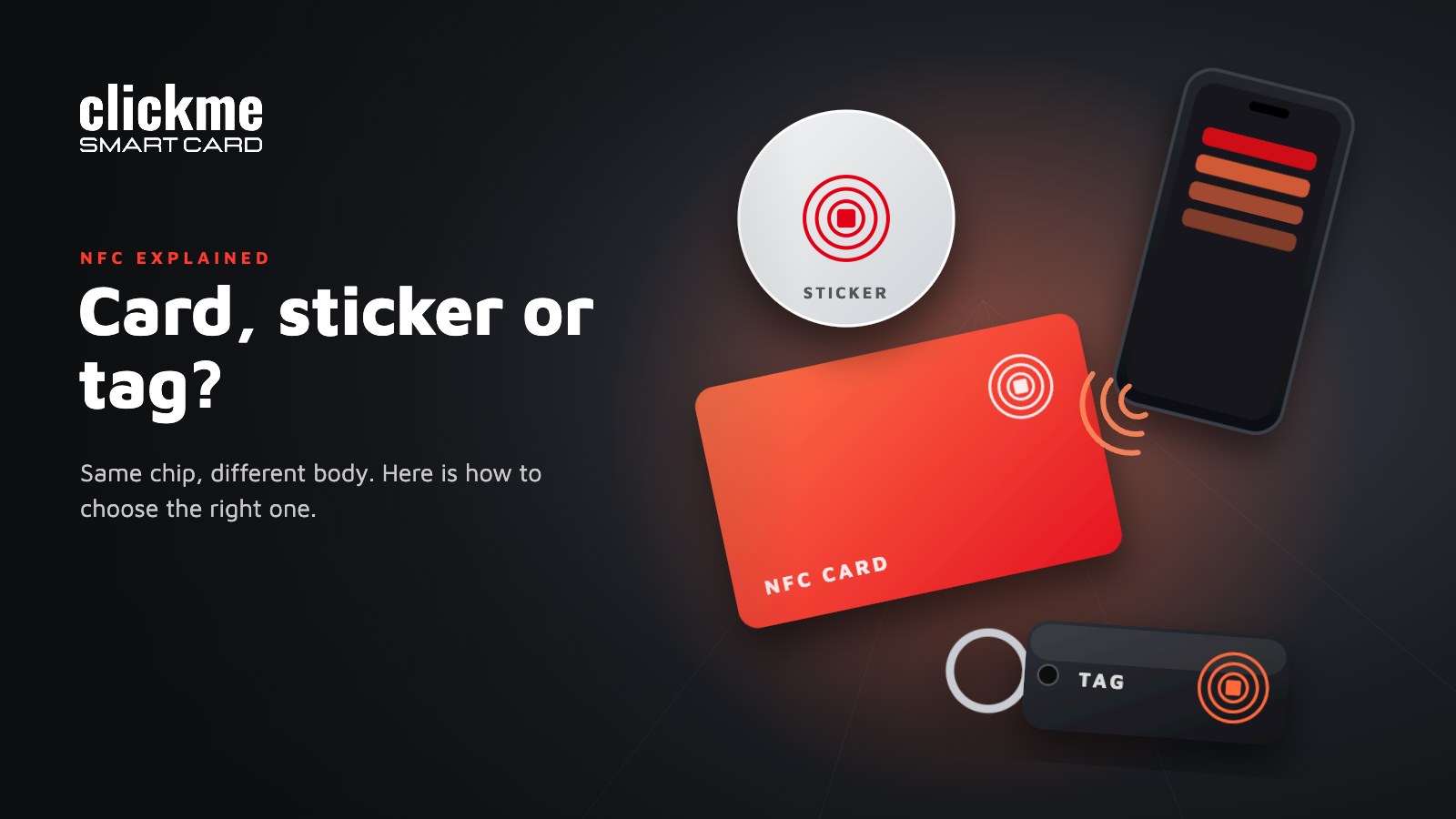
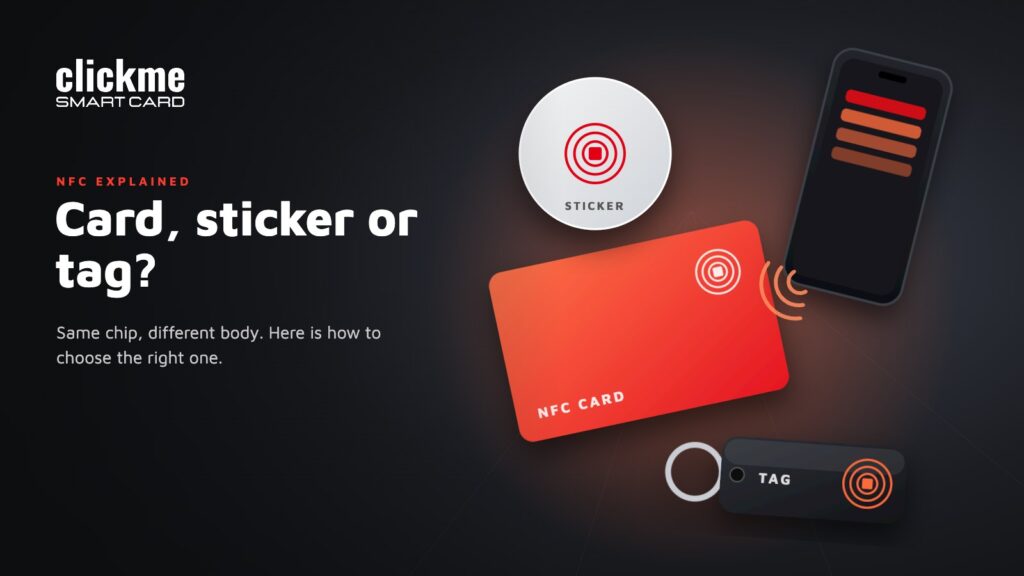
Short answer: An NFC card, an NFC sticker and an NFC tag usually contain the same tiny chip. The difference is the "body" around it: a card goes in your wallet, a sticker goes on a flat surface, and a tag (keychain, bracelet, pet tag) goes where it can be worn or carried. Choose by where people will tap it, not by the technology.
Every NFC product has two parts: a chip smaller than a grain of rice and a thin coil around it, the antenna. There is no battery. When a phone comes close, the phone's own radio field powers the chip for a split second, the chip answers with what is stored on it, and that's it.
If you are new to the topic, start with our basic guide: What is an NFC card?
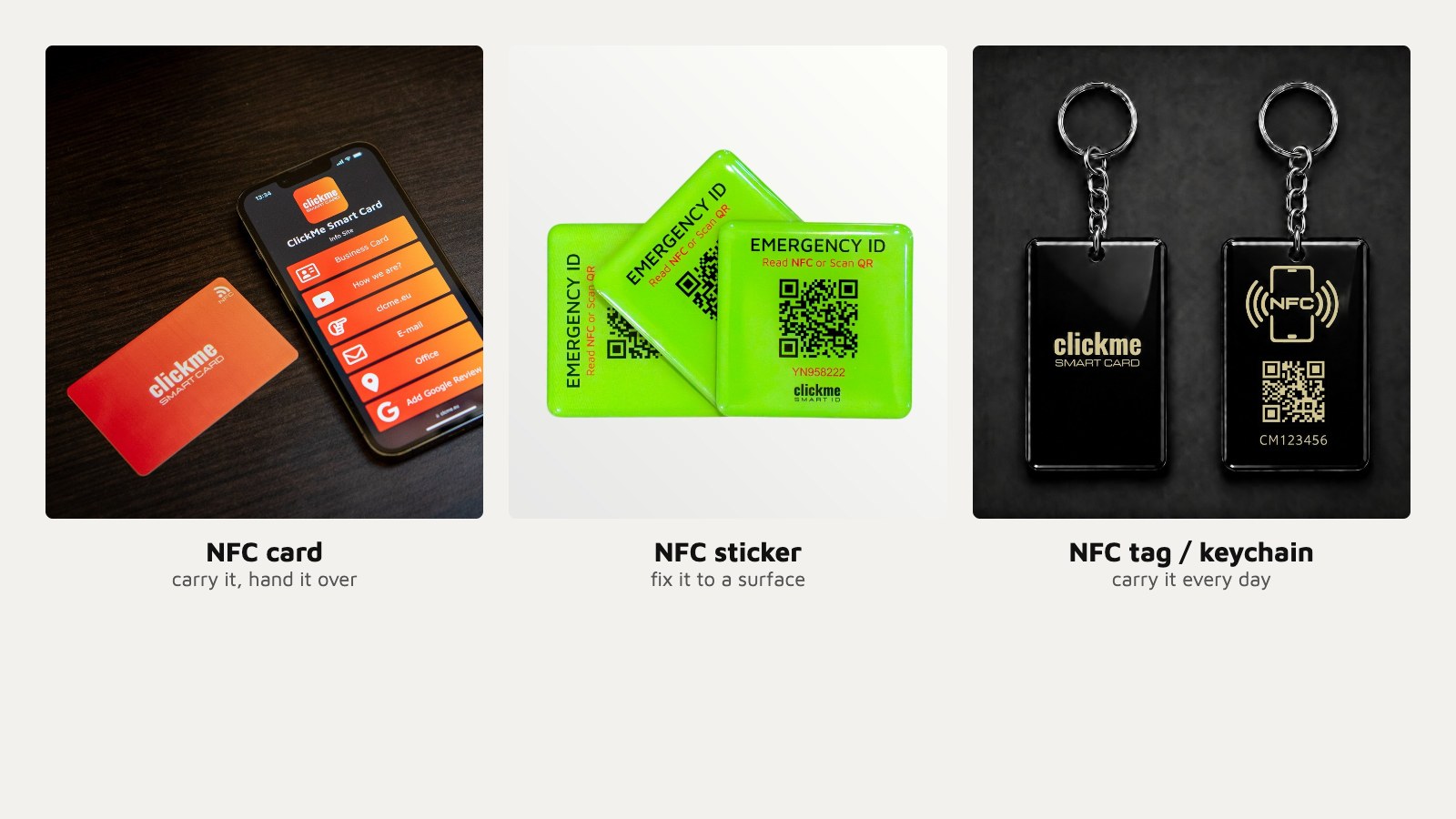
| NFC card | NFC sticker | NFC tag | |
|---|---|---|---|
| Looks like | A bank card (PVC, wood or metal) | A round or square label | Keychain, bracelet, coin, pet tag |
| Best for | Handing over, carrying in a wallet | Fixing to a table, wall, product, helmet | Wearing or carrying every day |
| Typical example | Digital business card | "Tap for Wi-Fi" on a café table | Emergency ID on a child's backpack |
| Lifetime | Years | Depends on surface and cleaning | Years, if waterproof |
Example 1 – The salesperson. Marta meets 30 people at a trade fair. She uses an NFC digital business card: people tap it with their phone and her contact saves instantly. A sticker would make no sense here – she needs something she can hand over.
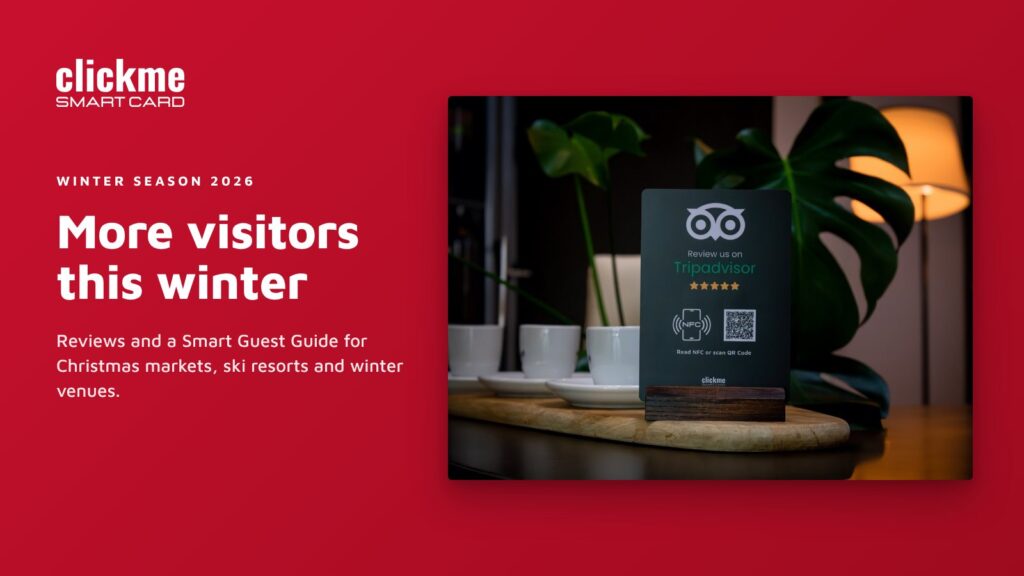
Example 2 – The restaurant. A pizzeria wants more Google reviews. A card at the till gets lost; a sticker on every table gets dirty. The owner picks a table display with NFC and QR code, which is really just a sturdy "body" for the same chip.
Example 3 – The family. Parents put an Emergency ID NFC sticker on a child's scooter helmet. If something happens, a helper taps it and sees who to call.
Only the shape and material. Both use a small chip and antenna, and both are read the same way by a phone. A card is made to be carried and handed over; a sticker is made to be fixed to a surface.
You can, for example on the back of your phone case. But for meeting people, a card works better because you can give it to someone or let them tap it easily.
No battery. Most modern iPhones and Android phones read NFC without any app – just hold the phone near it. Check which phones work in our iPhone vs Android NFC guide.
The chip itself can last many years. What wears out is the surface: sun, water and cleaning products. For outdoor or busy places, choose a coated sticker or a display.
Only if it is an on-metal sticker. Ordinary stickers placed directly on metal are often unreadable.
For staff who walk between tables: a Google review NFC card. For a fixed spot (table, reception, till): a display. We compared them here: Google review stand vs QR sticker.
Don't start by asking "card, sticker or tag?". Ask "where will people tap it?". The chip is the same; the body decides whether it is in the right place at the right moment. And remember: whatever body you choose, the chip only does something useful if there is good content on it.
See all ClickMe NFC products in the shop.

 English English
 Deutsch
 Français
 Español
 Italiano
 Magyar
 Română
 Ελληνικά
 Nederlands
 Polski
 Türkçe
 العربية
