The HORECA sector is changing faster than ever. By 2026, hospitality is no longer defined only by location, design or price. What truly differentiates hotels, restaurants and guesthouses today is how easy, intuitive and enjoyable the guest experience feels from the first interaction to the last review.
Guests expect instant access to information, minimal friction and environmentally conscious solutions. At the same time, operators face staff shortages, rising costs and increasing pressure to collect online reviews and maintain a strong digital presence. The future of HORECA lies exactly at this intersection.
In 2026, HORECA is no longer just an industry category. It represents a mindset where hospitality is smart, digital and guest-centric by default. Guests arrive with smartphones in their hands and expectations shaped by digital services in everyday life. They want answers instantly, without downloading apps, without waiting at reception and without printed brochures.
Modern HORECA businesses respond to this by offering self-service information, contactless solutions and seamless communication, all while keeping the experience personal and welcoming.
Today’s guests value simplicity more than ever. Wi-Fi access, local recommendations, contact details or transportation options should not require explanations or repeated questions at the front desk.
Guest-centric hospitality in 2026 means that information is available exactly when and where the guest needs it. A single tap or scan should be enough to access everything relevant during the stay. This reduces frustration, improves satisfaction and creates a sense of control and comfort for the guest.
Environmental awareness has become a decision-making factor for many travelers. Printed brochures, disposable paper materials and outdated communication methods feel increasingly out of place.
Digital guest communication helps HORECA businesses reduce paper waste, update information instantly and lower recurring printing costs. Sustainability in 2026 is not about making sacrifices. It is about using smarter tools that benefit both the environment and daily operations.
Smart guest cards combine NFC and QR technology to create a simple digital touchpoint between the guest and the property. With one interaction, guests can access Wi-Fi details, hotel services, local attractions, emergency contacts, menus or transportation information.
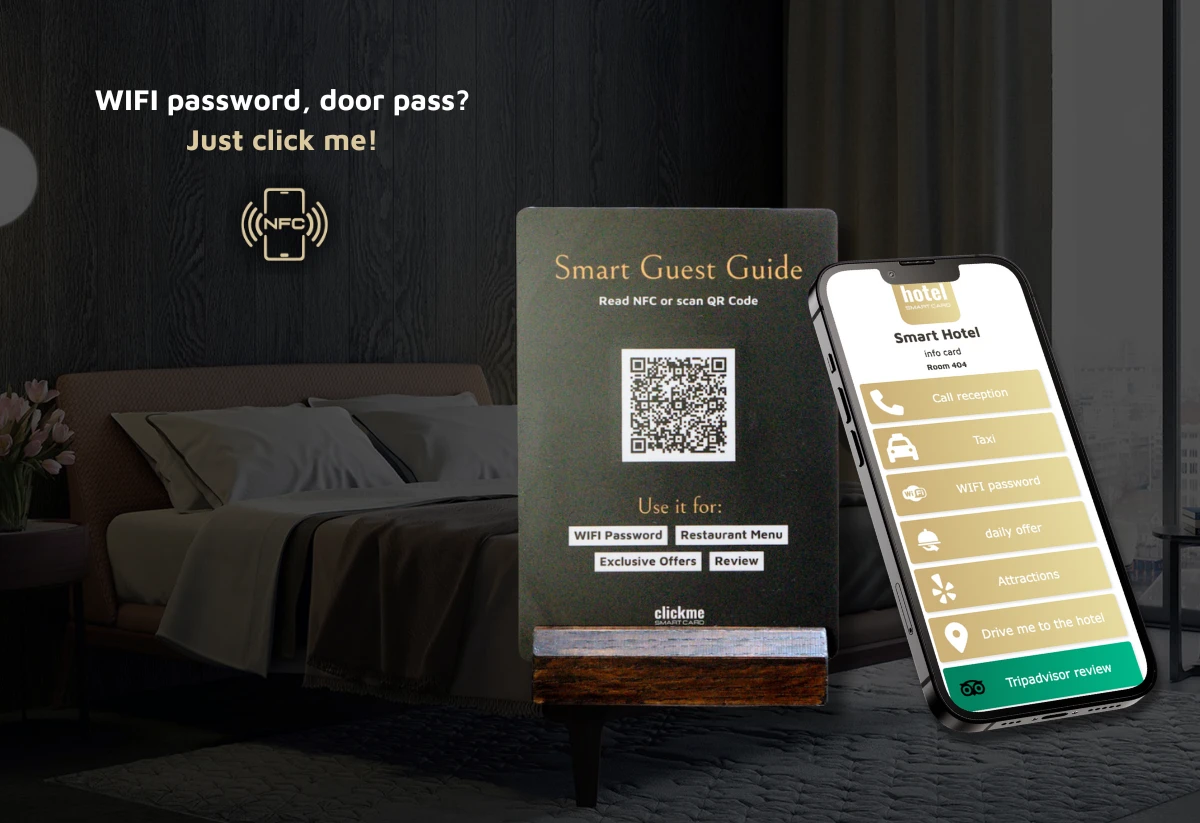
Solutions like the ClickMe Smart Guest Card go beyond basic information sharing. They also support Google Reviews and Tripadvisor ratings, helping hospitality businesses collect feedback at the right moment, when guests are most satisfied.
For staff, this means fewer repetitive questions and more time to focus on personal service. For guests, it means independence, clarity and a smoother overall experience.
In 2026, guest experience does not end at check-out. Online visibility is directly influenced by how easy it is for guests to leave feedback. Smart, well-timed review requests increase the quality and quantity of reviews without pressuring guests.
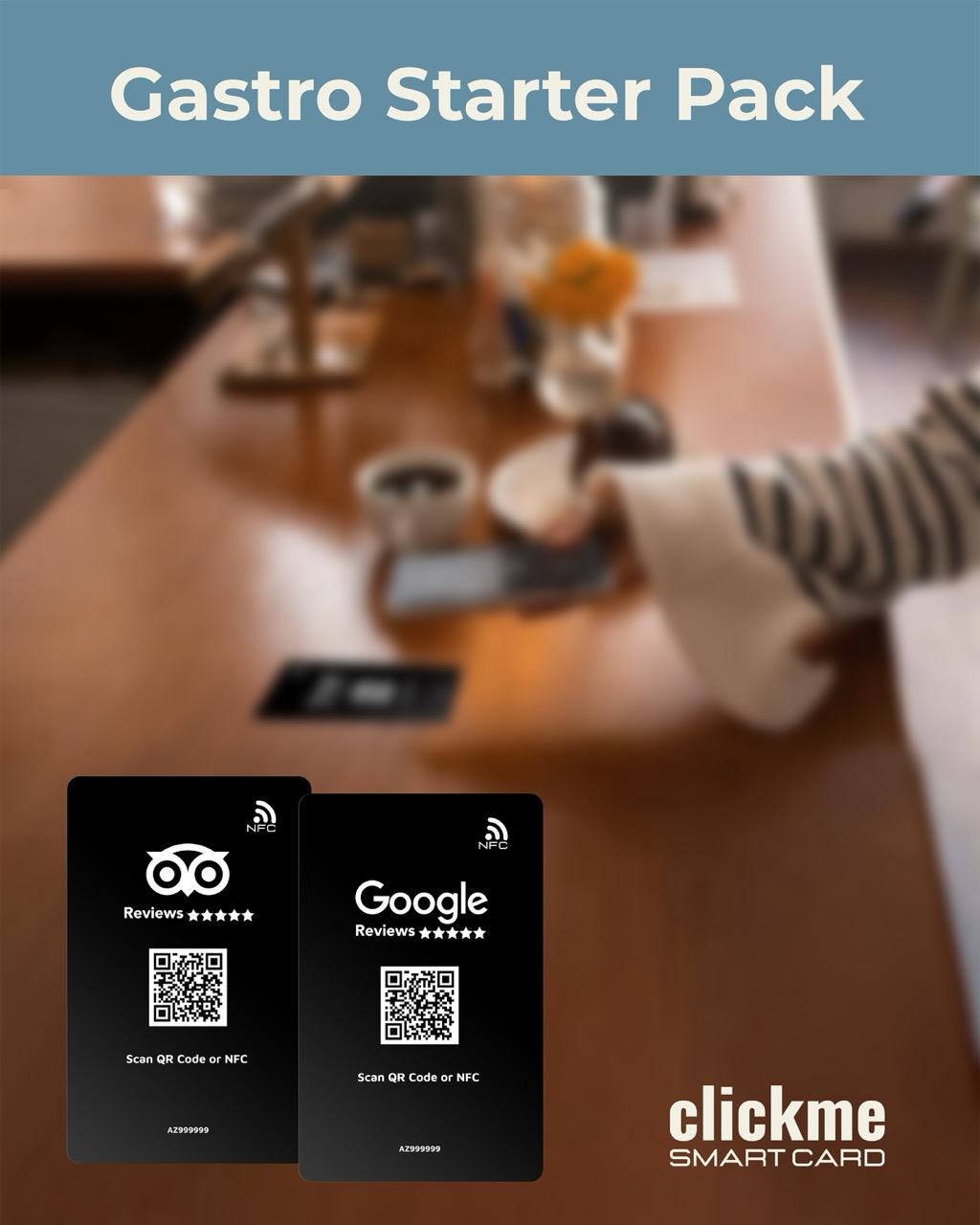
A well-designed digital guest journey naturally leads satisfied visitors to share their experiences online. This strengthens reputation, improves search visibility and builds trust with future guests before they even arrive.
Technology in hospitality should never feel complicated or intrusive. The most successful HORECA businesses in 2026 use digital tools quietly in the background while keeping the human touch in the foreground.
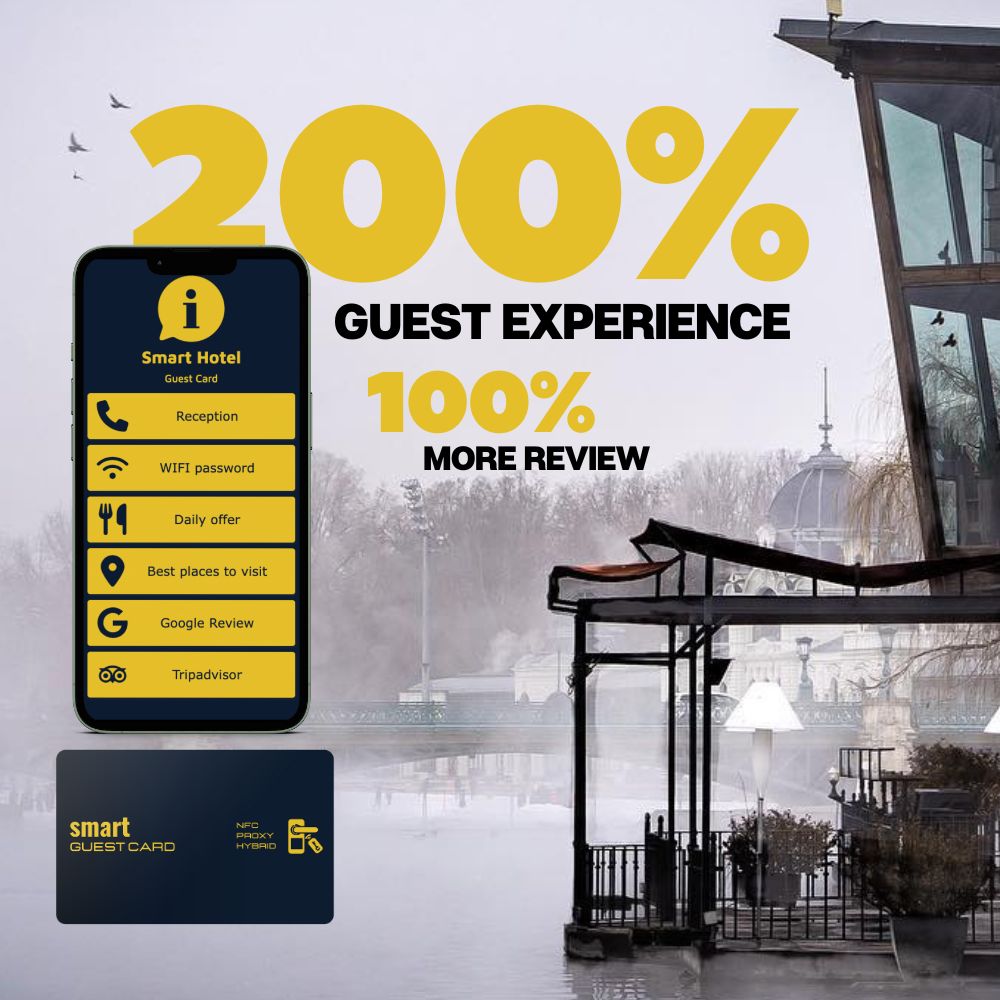
Smart guest cards, paperless communication and guest-controlled access to information are not trends anymore. They are becoming the standard for hotels, restaurants and accommodations that want to stay competitive, sustainable and genuinely guest-focused.
The future of HORECA belongs to businesses that make hospitality effortless.
Guest experience directly affects reviews, repeat bookings and online visibility. Simple and intuitive digital tools help guests feel comfortable and satisfied throughout their stay.
Smart guest cards provide instant access to essential information, reduce staff workload and support review collection, all without apps or printed materials.
Yes. They replace printed brochures and paper-based communication, reducing waste while allowing instant updates and long-term reuse.