Between 2023 and 2026, Google reviews became stricter, smarter and more important than ever. Here’s how the rules, algorithms and guest habits have changed – and how to turn your guests into authentic 5-star reviewers without breaking the rules.
Compared to 2023, Google’s attitude toward business reviews has significantly tightened by 2025–2026. Google now uses artificial intelligence (for example, Gemini AI) to filter out fraudulent reviews and is removing fake or policy-violating feedback at an unprecedented scale. In 2024 alone, it removed more than 240 million reviews that violated its policies (source: blog.google).
In 2025, spam filtering was further improved, which led many businesses to notice that some new, but genuine, reviews were also not appearing on their profiles. The reason is that Google’s AI-based system sometimes filters too aggressively and mistakenly flags real feedback as spam – for example, if a lot of similar-sounding reviews are posted within a short time frame (source: momentumvirtualtours.com).
Overall, in 2025 and 2026 Google is cracking down harder on manipulated reviews, more frequently re-evaluating older reviews as well, and displaying warning messages to profiles where suspicious activity is detected (source: blog.google). One new warning, for instance, says on your profile: “We’ve removed suspicious, high-rating reviews from this place”, and in such cases Google may suspend the display of new reviews for up to 30 days (source: websitesmadewithlove.com). All this shows that Google’s goal for 2026 is to make the reviews displayed on Google Business Profile listings even more reliable and trustworthy.
At the same time, user behavior has also changed. Guests today are more conscious: they are less gullible when it comes to weak or suspicious reviews, and tend to look instead for detailed, authentic stories. Research shows that although almost everyone is open to leaving a review (96% of consumers would be willing to leave feedback about a place) (source: brightlocal.com), trust levels have dropped: while in 2020, 79% of people trusted online reviews as much as personal recommendations, by 2025 this figure had fallen to 42% (source: brightlocal.com).
In other words, buyers are more cautious, and the number of stars is no longer the only thing that matters – they pay close attention to the text of the review, how recent it is, and even to any photos attached (source: brightlocal.com). In summary: in 2026, quality, transparency, and authenticity are crucial when it comes to Google reviews – both in terms of Google’s rules and consumers’ expectations.
In 2025–2026, several important Google policies and algorithm updates affected Google Business Profile (formerly Google My Business) reviews. Google has made it very clear that any form of manipulation is forbidden: its policies explicitly state that you may not offer any incentives – money, discounts, or gifts – in exchange for writing a review or for removing a negative one (source: support.google.com).
At the end of 2025, Google tightened the rules even further: for reviews coming through Google Merchant Center, it became mandatory to indicate if any incentive (for example, a gift card or discount) was given in exchange for the review (source: thriveagency.com). This means that if a review is incentivized, it must be publicly labeled as such (for example, with an “incentivized” tag), otherwise the business risks serious penalties – up to suspension of the profile or a drop in search rankings (source: thriveagency.com). Google’s aim is to increase transparency and curb fake, bought reviews, as such practices distort consumers’ true picture of a business (source: thriveagency.com).
On the technology side, in May 2025 Google rolled out a significant algorithm update to its review filtering. As part of this, Google’s AI became more advanced at detecting spam and now automatically re-evaluates older reviews as well to identify potential abuse (source: it2.tv). Several new mechanisms were introduced; for example, if suspicious patterns appear with a business – a sudden flood of reviews, many similar five-star entries with nearly identical wording, or reviewers posting from the same IP address – the system can temporarily block new reviews from appearing and a warning banner may show up on the public profile (source: it2.tv).
According to Google’s official communication, these AI-driven improvements are meant to make information on Google Maps and in Search more trustworthy (source: blog.google). In practice, by 2026 Google’s algorithm is far stricter in punishing violations: reviews from fake profiles, obscene or promotional content, and purchased reviews are immediately caught by the filter and removed (source: it2.tv). The system will even warn users if a large number of suspicious five-star reviews have recently been deleted from a particular place’s profile (this is the banner mentioned above) (source: blog.google).
In short, by 2026 Google’s rules are tighter and its algorithm is smarter and more relentless – all so that reviews truly reflect real customer experiences.
It’s also important to note that the European Union has taken steps to protect the integrity of online reviews. From 2024, new EU consumer protection rules (as part of the so-called Omnibus Directive) require online platforms to indicate how they verify the authenticity of reviews and prohibit fake reviews or review manipulation (source: key-g.com). In 2025, European tourism organizations adopted a separate code of conduct for accommodation reviews, aiming to ensure that only real guests can leave a review, thereby improving the reliability of online ratings (source: transport.ec.europa.eu).
All this clearly shows that it is not only Google but also regulators who are working to increase the authenticity of reviews in 2026 – and businesses need to adjust accordingly.
Guests’ willingness to leave reviews and their reviewing habits have also changed a lot in recent years. On the one hand, more and more consumers see it as natural to leave online feedback about a place. According to a 2025 survey, 96% of respondents said they would at least in theory be willing to leave a review for a business or service they used (source: brightlocal.com). Only 4% said they would never leave a review. This is a small increase compared to 2023, indicating that today almost everyone is a potential reviewer – meaning that business owners should take advantage of this and actively encourage review writing.
On the other hand, what guests consider a valuable review has also changed. Previously, many people focused only on the number of stars and the overall rating; today, users dig deeper into the content of reviews. Recent studies have shown that while consumers still consider a detailed description of a positive experience to be the most helpful, the proportions are shifting. By 2025, 16% fewer people considered this the single most important factor than in 2024 (source: brightlocal.com).
At the same time, demand has grown for longer, more detailed reviews (by around +7%), and more people now think it’s important for reviews to include photos or videos (about +3%) (source: brightlocal.com). This shows that guests are reading feedback with a more objective eye: they don’t just want to see praise, but are looking for facts and evidence – for example, balanced reports supported by photos.
They also care less about a business having a huge number of reviews. In 2025 more people said that even 10–20 reviews are enough for them to form an opinion, and the proportion of customers who don’t mind a low number of reviews has grown, as long as those reviews feel authentic (source: brightlocal.com). This is good news for small local businesses: guests are starting to understand that a family-run restaurant or a boutique apartment will never have thousands of reviews – but whatever reviews they do find, they will scrutinize for credibility and substance.
Guests are also less afraid of leaving negative feedback. Nowadays many consumers feel they are helping others by writing an honest critique and don’t only leave a review when everything was perfect. In 2025, 29% of consumers said they had left reviews about both positive and negative experiences in the previous year (this figure was only 25% in 2024) (source: brightlocal.com).
At the same time, the most common reason guests don’t leave a review is that their experience “wasn’t special enough” to write about (source: brightlocal.com). This is a warning sign for business owners: very few people will bother to leave a review for an average, forgettable experience. You need to stand out – with excellent service or something that makes the visit memorable.
Around 10% also said they felt their review “wouldn’t matter anyway” (source: brightlocal.com) – which can easily be addressed by making it clear to guests that their opinion really does matter and that you genuinely appreciate it.
Overall, the trend is that guests are willing to leave reviews, but they only do so if you give them a strong reason (in either a positive or negative direction), and they expect the business to care about the feedback (by responding, etc.). In 2026, therefore, quality customer experience and active review requesting go hand in hand: you need to motivate guests, but if you win them over, they’ll happily become your “marketing ambassadors” on Google.
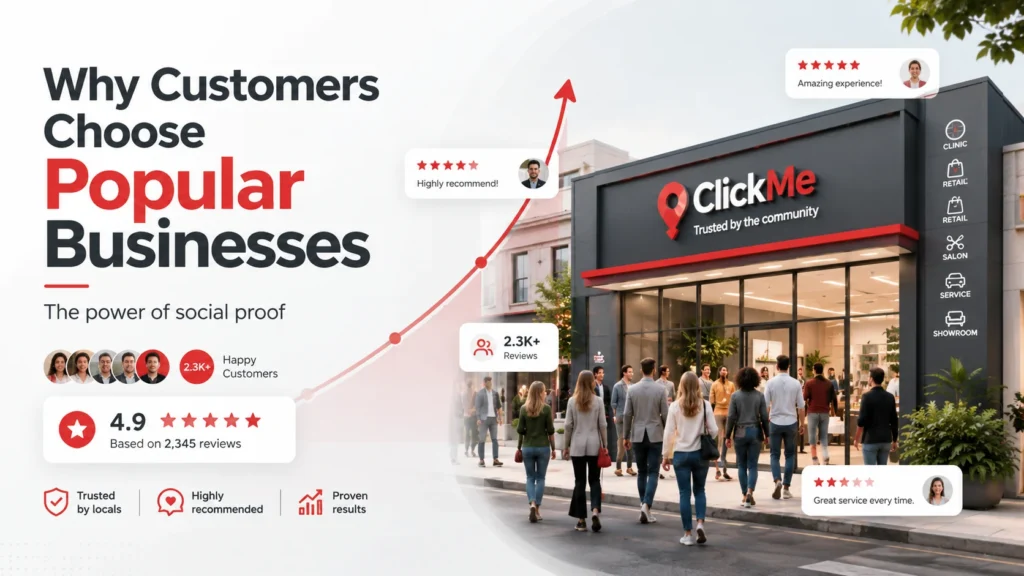
For a local business to succeed online in 2026, a stable, positive review profile is essential. One reason is that Google’s algorithm is giving more and more weight to reviews in local rankings. Recent analyses show that in Google Maps’ “Local Pack” (the top map results above normal organic results), review-related signals account for about 20% of the ranking factors – a significant increase compared to 2023 (source: advicelocal.com).
These review signals include:
Google’s own help pages confirm that “the more reviews you have and the higher your average rating, the better you can rank in local search results” (source: support.google.com). In other words, collecting five-star reviews directly impacts your traffic: with more positive reviews, you’re more likely to appear among the top search results, which can lead to more clicks, bookings, and visits.
It’s not only quantity that matters, but also quality and freshness. As part of the “prominence” factor, Google considers how often new reviews are posted to your profile. If fresh, positive feedback is regularly coming in, that signals to the search engine that your business is active and popular. Detailed reviews that include relevant keywords can also help increase relevance: if many guests mention “gluten-free pizza” in reviews of a pizzeria, Google will more easily associate that place with that search query (source: searchenginejournal.com).
In addition, your star rating on Google Maps and in local search results appears even before anyone clicks on your profile. A 4.5–5.0 average stands out and attracts clicks, while a weaker average (for example, 3.0) can scare away potential guests – even if you rank relatively high – because your reviews don’t make you look trustworthy. Google also displays extra elements such as frequently used keywords in reviews (“cleanliness”, “friendly staff”, etc.) or highlighted positive/negative reviews. Without high-quality feedback, you miss out on these features and lose ground to local competitors.
And we shouldn’t forget user trust: in 2026, collecting good Google reviews is also more important because modern consumers put online reviews almost on the same level as personal recommendations. According to an EU report, 81% of people use Google to look at reviews of local businesses before making a decision (source: websitesmadewithlove.com).
So if you don’t have great reviews, or you have many recent negative ones, this can directly impact your revenue. Conversely, more five-star reviews don’t only improve your rankings; they also boost customers’ confidence and willingness to choose you.
In summary: in 2026, high-quality Google reviews are strategically important – both for the search algorithm and for customer decision-making.
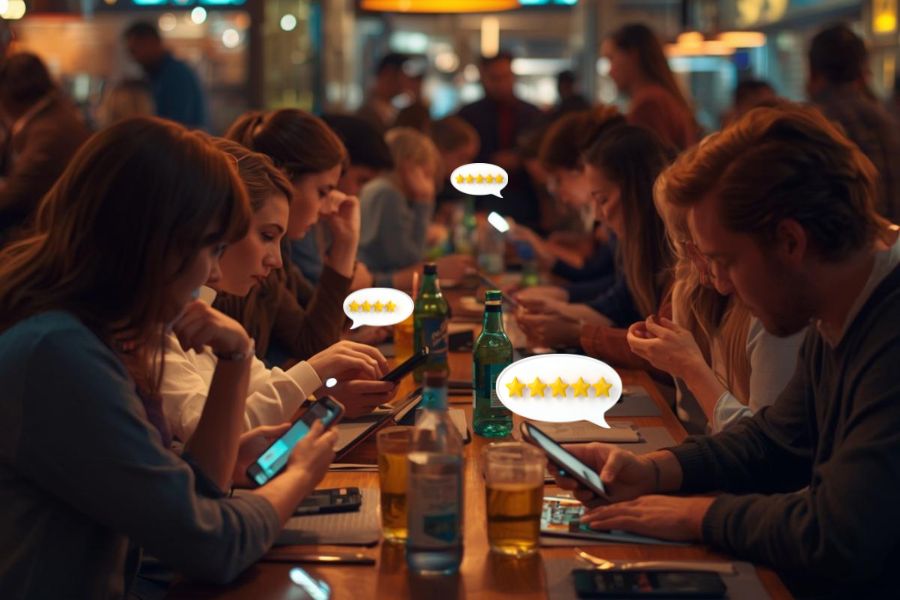
Encouraging your guests to leave reviews requires both good communication and practical tools. First of all: you have to ask – often that’s the entire “secret”. It’s surprisingly simple but effective: one survey found that 40% of consumers are happy to leave a review if they receive an email request (this figure was only 32% in 2024) (source: brightlocal.com), and 27% said that a personal request would also likely prompt them to review (source: brightlocal.com).
So if you proactively and politely ask guests to share their experience on Google, you can dramatically increase the number of reviews you receive. Important: always ask in an honest and neutral tone – don’t say “Please give us 5 stars!”, but something like:
“We’d be grateful if you could share your experience on Google, so others can see what it’s like to visit us.”
This respects Google’s policies:
Instead, you should encourage everyone in general: you’ll likely get five stars from a satisfied guest anyway, but what’s honest is if less satisfied guests can also share their side – that way you avoid a “review bubble,” and Google is less likely to feel that you’re trying to manipulate your profile.
Now let’s look at practical tools – both physical and digital tricks – that can make it easier for guests to leave a review.
From a usability perspective, the fewer clicks the guest needs, the better. One of the easiest tools is a QR code that leads directly to your Google review form. In your Google Business Profile dashboard, you can generate a direct review link and turn it into a QR code.
You can:
Next to the QR code, always explain what to do. For example:
“Scan the code and rate your experience on Google – it only takes 1 minute.”
This creates a quick and convenient experience and increases the chances that guests will actually leave a review.
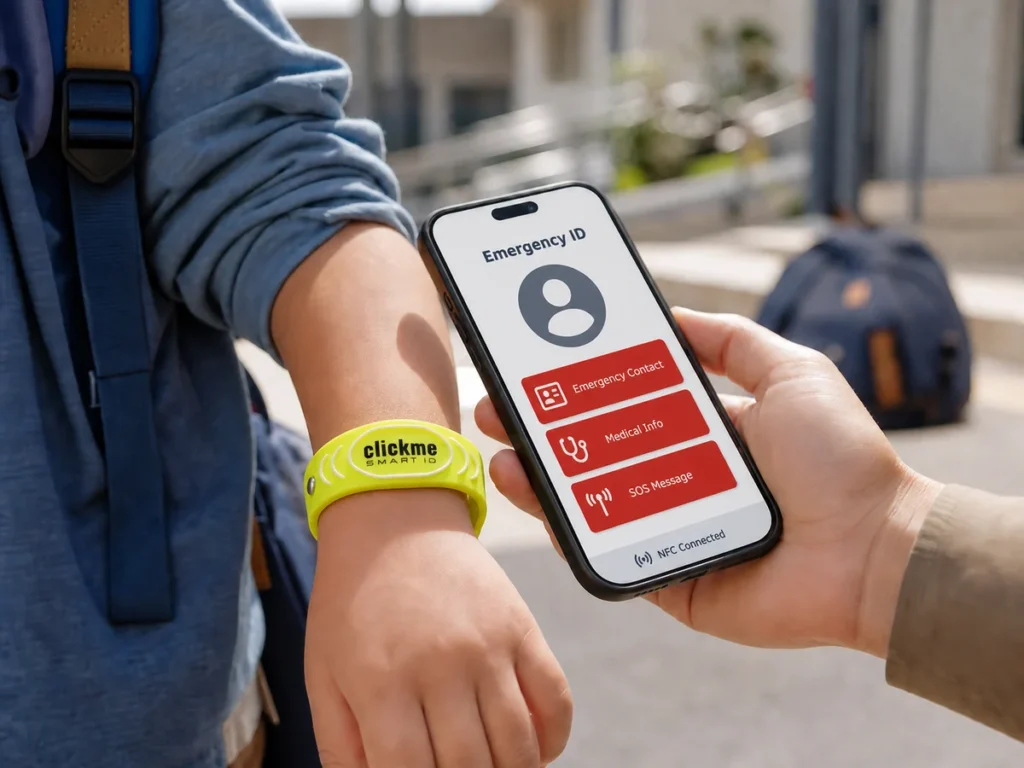
Another elegant, guest-friendly tool is NFC technology. With NFC review cards or displays, guests only need to tap their phone to a physical card, and the Google review link opens instantly – no app needed, modern smartphones support NFC by default.
For example, you can use ClickMe Review Cards & Displays: – a smart, contactless solution that combines NFC and QR code on a premium card or table display.
Typical use cases:
The advantages of NFC review cards and displays:
Don’t let the guest’s experience go cold – it’s best to send a reminder within 24–48 hours. In this message you can thank them for their visit and gently encourage them to leave a review.
Example follow-up email:
Thank you for visiting us!
We hope you had a great experience. If you have a moment, we’d really appreciate it if you could share your feedback on Google – it helps other guests find us and supports our team.
[Review link / button]
Keep the tone kind and personal (so it doesn’t feel like spam), and don’t pester someone who doesn’t respond. One reminder is plenty – if they want to write a review, they will respond to that single nudge. SMS can work too, and some guests may even respond better to it, but only use it if you’re sure you won’t be annoying them.
If you already have printed materials (flyers, business cards, invoices), add a brief call to action asking for a review. For example:
This shows professionalism in both directions – you value praise and criticism alike.
Encourage your followers on social channels to share their experiences on Google as well. For example, you could post on Facebook:
“We’re so grateful for all your positive feedback – if you haven’t done so yet, we’d love to hear your thoughts on our Google page. It means a lot to us!”
Always include the exact link, because people won’t search for you on their own.
In 2026, the following practices are risky or outright forbidden:
These tactics can lead to removed reviews, warnings, ranking drops or even profile suspension. Focus on authentic, organic feedback instead.
If you still want to show appreciation with some small perk for those who leave reviews, do it in a general and transparent way. For example, you could announce:
“Every month we’ll randomly pick one reviewer to receive a 10% discount voucher.”
– including everyone who leaves a review, not just those who gave five stars, and communicating this openly. This way you respect the principle of transparency around incentives. In some markets, such reviews are even labeled as “incentivized” on Google.
However, the best case is when you don’t need any such tactic at all: for a satisfied guest, the reward is the experience itself, and many will gladly give you five stars out of pure goodwill.
Last but not least: respond to every review. Guests notice when you care about their feedback. Thank people for their praise, for example:
“We’re so happy you had a great time with us, we hope to see you again!”
And reply politely and constructively to criticism. Google also sees active responses as a positive signal: it shows that you care about your guests and their experiences. A courteous response to a negative review also reflects well on you in the eyes of other readers and can even convince them to give you a chance.
Turning guests into five-star reviewers doesn’t end with collecting reviews – you need to continuously nurture your relationship with your audience online as well. In the long run, this builds a loyal community that becomes your best marketing team in the digital space.
To sum up the above strategies, it’s worth highlighting one key point: satisfied guests are the foundation of everything. You don’t “manufacture” five-star reviewers with tricks – you earn them with excellent service.
In 2026, the success formula is:
Google is constantly working to make quality outweigh quantity in reviews and to ensure that real experiences are reflected there. If your business moves in the same direction, you won’t just climb higher in the rankings; you’ll also win your guests’ loyalty and trust.
The new era of local SEO is all about collecting and managing honest, high-quality reviews – and those who master this will, in 2026, be happily watching their growing crowd of guests who have turned into enthusiastic five-star reviewers.